How Board is built
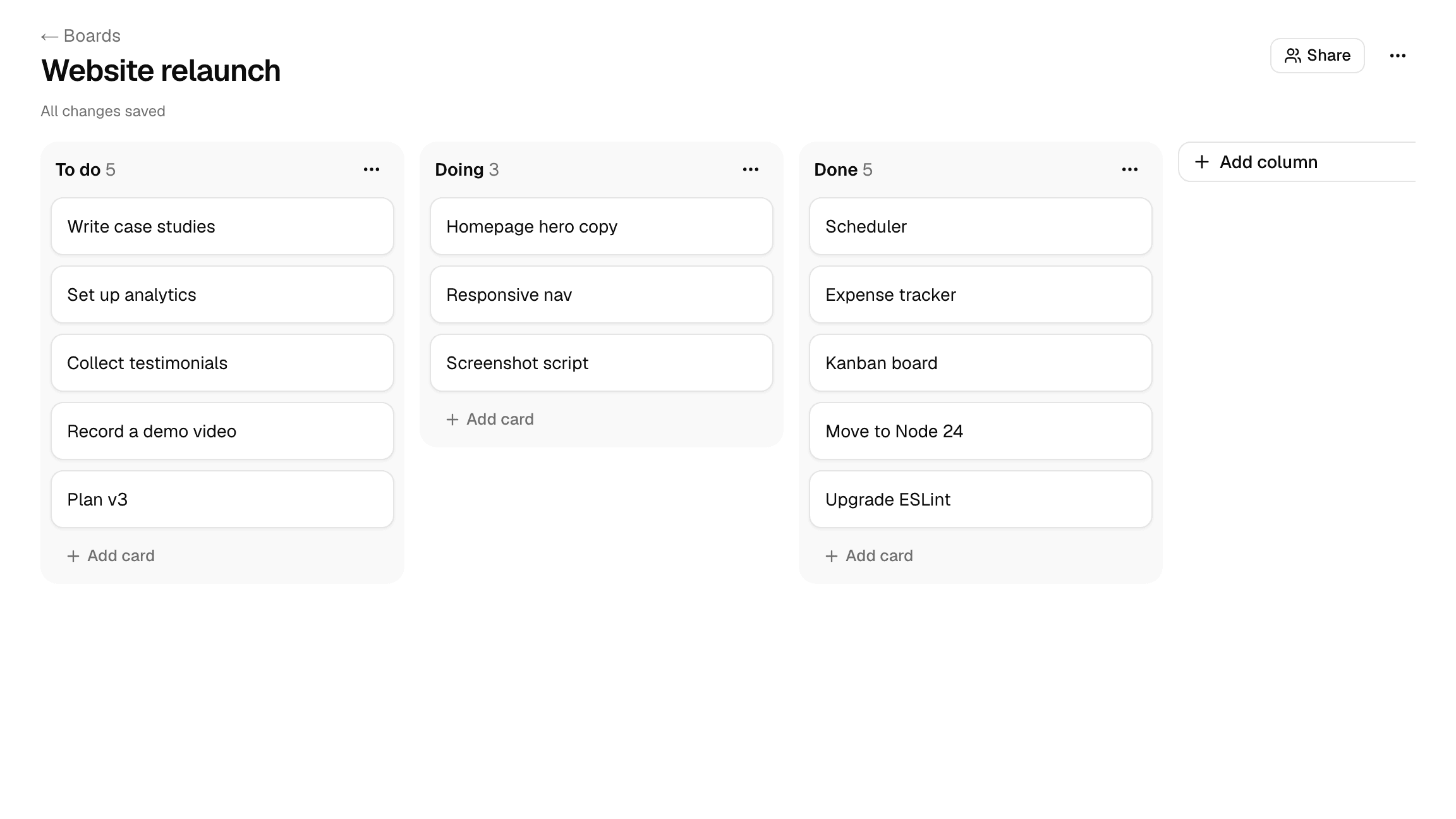
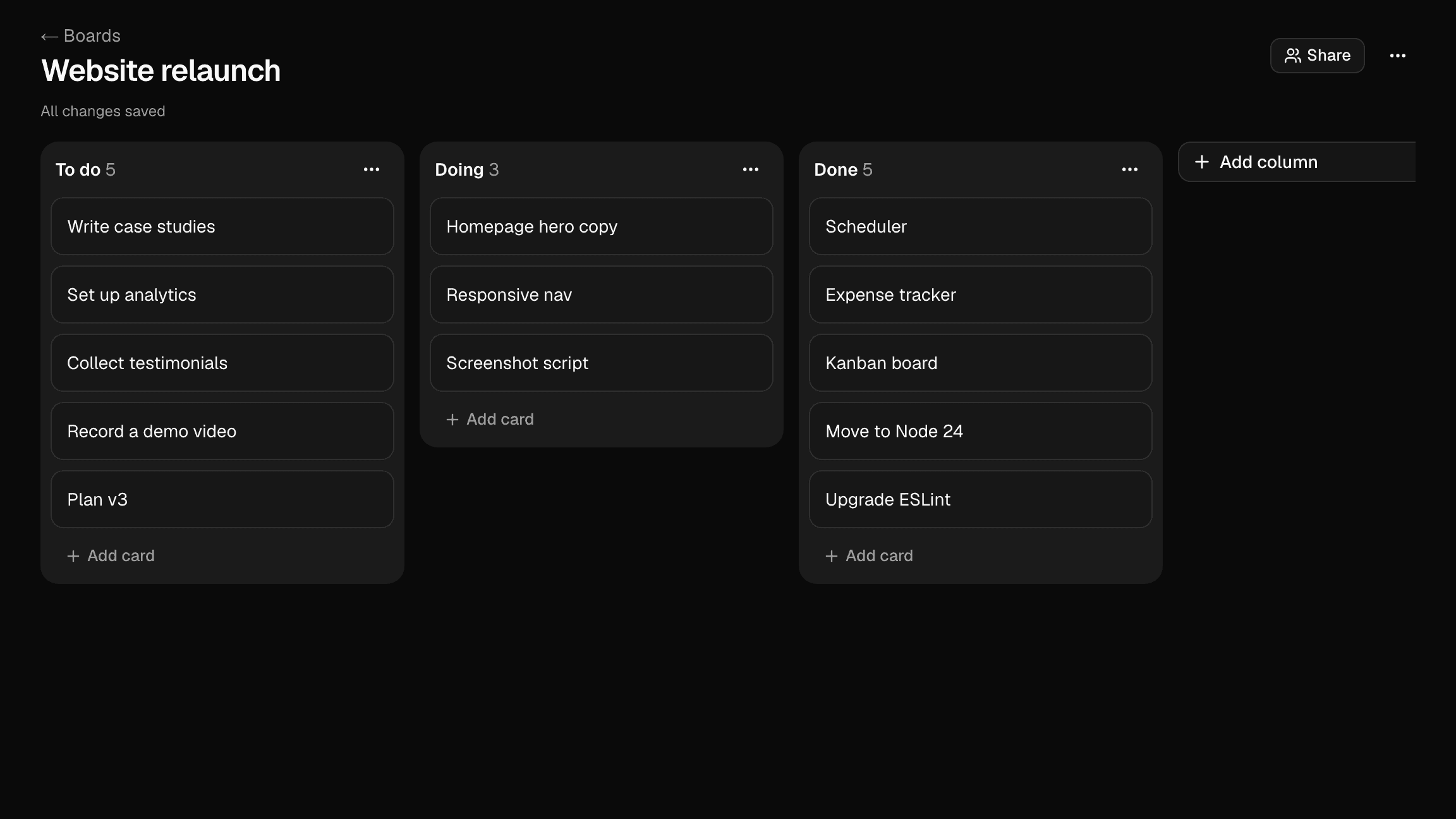
A board looks simple until two people use it at once. Ordering, conflicting edits and accessibility drive the design.
Ordering with fractional indexes
Each card has a string key, and order is plain string order. Moving a card computes a key strictly between its new neighbours, so a move writes one row instead of renumbering the column. Keys are base-36, never end in zero (so there's always room), and appends step by one digit to keep keys short. A property test inserts 5,000 cards at random positions and checks the order stays strict.
The server never trusts a key from the browser. It looks up the card's real neighbours under a per-board advisory lock and computes the key itself, so a stale view or two simultaneous moves still produce a valid, unique order. Keys are compared byte-wise (COLLATE "C") to match JavaScript.
Instant, but honest
Moves, adds and deletes apply immediately with React's useOptimistic and roll back if the action fails. A "Saving… / All changes saved" status and a leave-page warning make sure a change isn't lost by closing the tab mid-save. ⌘Z undoes moves, and deletes are soft so the toast's Undo can restore them.
Edits carry a version number. If someone else saved the card first, your save is rejected and you see their version instead of silently overwriting it.
View the codeAccessible drag and drop
Cards can be moved by mouse, touch (press and hold), or keyboard: Space to pick up, arrows to move, Space to drop. The library's default keyboard handling only moves within one list, so a custom coordinate getter jumps between columns. Every step is announced to screen readers using card and column names.
Why no realtime (yet)
Live cursors need a long-lived WebSocket server, which Vercel doesn't host. Rather than make a third-party realtime service the centre of the demo, collaborators see each other's changes when they return to the tab. Live sync can be added later (for example on Cloudflare Durable Objects) without changing the data model.
How it's tested
- Unit: fractional keys (property test), board state transitions used by drag, undo and optimistic updates
- E2E: mouse drag between columns, undo, persistence after reload
- E2E: keyboard-only move, checking the screen reader announcements
- E2E: owner and editor edit the same card; the second save sees the first
- E2E: viewers get no editing controls; strangers get a 404
What I'd build next
- Live sync on Durable Objects
- Drag to reorder columns
- Labels and due dates